For almost a century, the world has known one version of Kong: a celluloid phantom projected onto silver screens, a spectacle of chains and skyscrapers and a screaming woman whose fear was framed as the whole truth. That version turned an island into a backdrop, a people into shadows, and a being of immense intelligence into a cautionary tale about the dangers of the “primitive.” It did what so much of twentieth-century entertainment did so efficiently: it made erasure beautiful.
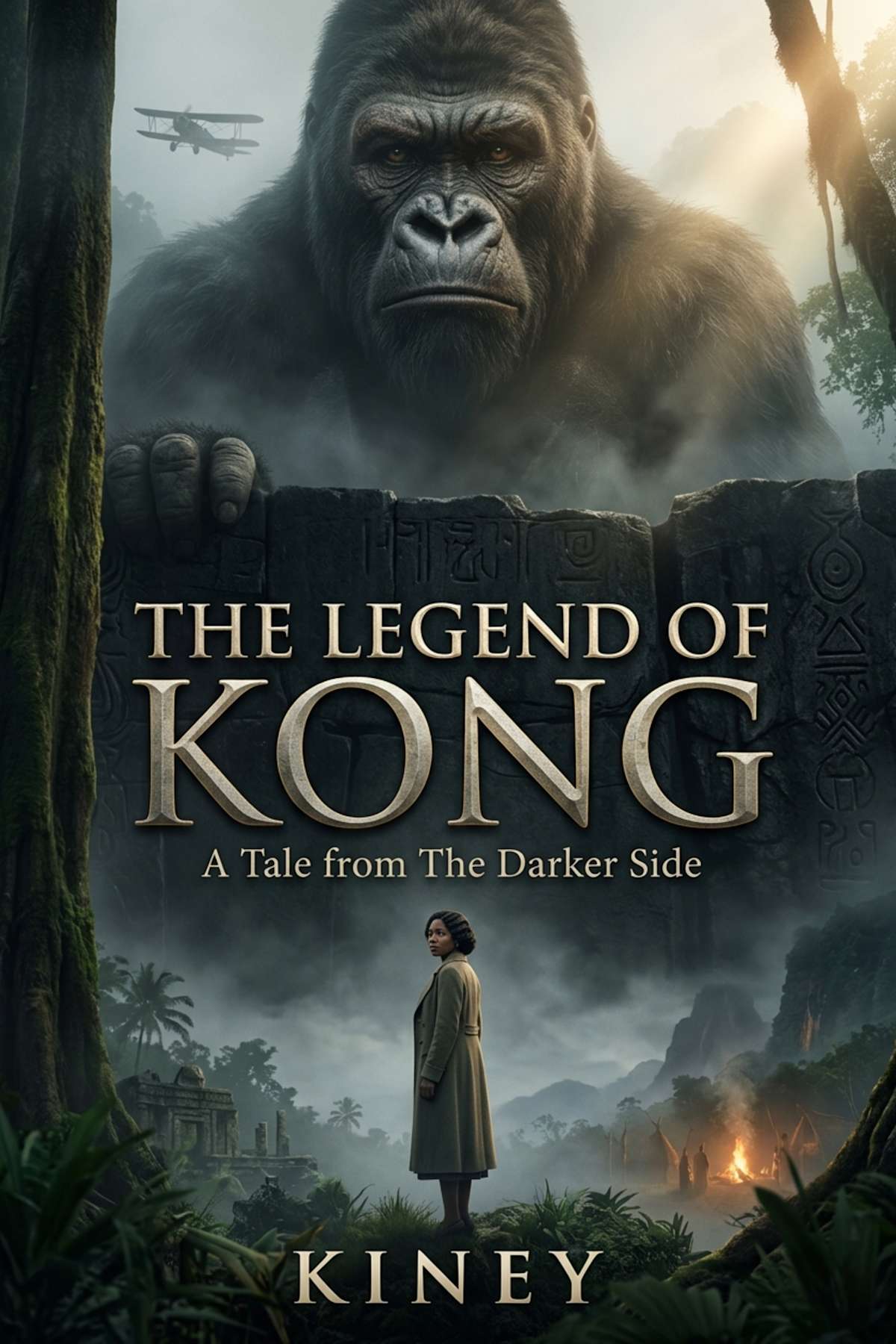
The Legend of Kong is not content with that beauty. It goes looking for the record beneath the reel. It listens for the voices that never made it into the credits: the People of the Fall and their composite tongue, the sky-born pilot who taught a double alphabet at the base of a stone wall, and the daughter who arrived by mistake—and by design—on an island that had been waiting for her all along. Here, Kong is not a monster but a Keeper, the living archive of a world that refused to forget itself even as empires named and catalogued everything in reach.
What this book offers is not a remake but a reparation: a narrative that returns Black women to the center of a myth built on their absence, that restores Skull Island to its complexity, that insists the most astonishing contact in this story was not between a beast and a blonde, but between a Black Texan aviatrix, her daughter, and a being who understood coexistence better than any studio executive who ever sat in a projection room on Vine Street. It is a love letter to those the archive misfiled, a challenge to the stories we grew up repeating, and a reminder that the real horror has always been the machines of men, not the creatures beyond the wall.
To open The Legend of Kong is to step past the soundstage and into the fog at the edge of the world, where history and myth trade places and the question is no longer “What killed the beast?” but “Who gets to tell what really happened?”

September 7, 2026
There are stories we inherit and stories we have to steal back.