kiney©️

Books
View All

Series



Planet of the Races
Readers love this series because beneath the high-concept sci-fi, it carries a sharp, nuanced truth: i is hunted as a criminal before he ever gets the chance to prove he's peaceful. Neighborhood profiling, pushed out into extraterrestrial space. It takes the familiar...
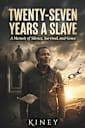
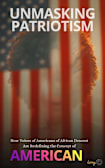

The African American Experience
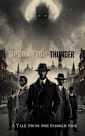
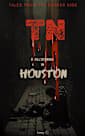

+4
Tales From The Darker Side
kiney writes the kind of historical horror you’d expect if Stephen King traded small‑town Maine for the archives of American empire. Where King’s monsters crawl out of sewers and hotels, kiney’s rise from chain gangs, black ops, and buried case files—systems so real they...
Praise
kiney© writes historical horror, Black speculative fiction, and socially conscious science fiction that confront the stories America—and the world—would often prefer to bury. His work carries the immersive, character-driven dread readers may recognize in Stephen King’s fiction, but kiney©’s monsters do not only emerge from haunted hotels, dark woods, or small-town secrets. They rise from chain gangs, black operations, stolen land, racial violence, political betrayal, addiction, religious manipulation, and case files sealed away by institutions that expect history to forget. Where traditional horror asks what might be hiding in the dark, kiney© asks a more unsettling question: What if the horror has been in plain sight all along? In his fiction, ghosts may wear the faces of the forgotten, but they also live in legal codes, presidential memos, church pulpits, military secrets, and systems built to decide who is protected, who is believed, and who can be sacrificed. The jump scare comes when readers recognize that the most frightening parts of the story are often rooted in the real world. At the heart of kiney©’s work is the belief that humanity’s greatest threat may not be alien invasion, supernatural evil, or distant monsters. It may be humanity’s continued willingness to divide itself. His stories explore the damage caused by racism, colonialism, greed, violence, and the misuse of faith and power. But they also make room for family, healing, courage, spiritual endurance, collective memory, and ordinary people who refuse to let truth disappear. kiney© writes for readers who believe fiction can entertain, unsettle, challenge, and heal. His work insists that the future must include the people history tried to erase—and that the stories of survivors are not footnotes to America’s past.
They are part of the blueprint for what humanity can become.
–
Goodreads
The reason my Black Sci‑Fi stories work for me is that they move in rhythm with historical trauma. What we’ve lived through is not abstract—it’s inherited memory, body‑level knowledge of danger, and the daily work of surviving structures built against us. A non‑Black reader can study that history, empathize with it, even be changed by it, but they will never fully feel the layered complexity of carrying it from the inside. When I write Black Sci‑Fi, I’m not inventing horror from a safe distance; I’m translating a world my people already know. The nightmares we’ve seen, survived, and still foresee are landscapes only we could imagine with that kind of accuracy, because they’re built from our hells: captivity, dispossession, medical betrayal, policing, erasure. For us, it isn’t just speculative. It’s our Black science fiction. We know the cruelty of the tormentors in first person—through ancestors, elders, and our own lives—while others often encounter it in third person, as something that happened to someone else, somewhere else, that “couldn’t happen to me.” That difference in vantage point is why Black sci‑fi feels so specific: it isn’t just about monsters and futures. It’s about the precise way a people who have already met the monster imagine what it might do next. The only writer I think black sci-fi can compare with is the master of the macabre Steven King. His insight to the horror genre is none but spectacular and that where I see black sci-fi, the definitive difference in science fiction. It’s more darker and easier to believe. The only writer I instinctively measure Black sci‑fi against is the master of the macabre, Stephen King. His feel for horror—the way he locates dread inside ordinary towns, families, and bodies—is spectacular, and that’s where I see the kinship: Black sci‑fi lives in that same intimate terror, but with a different engine. King often asks, “What if the monstrous thing came to your quiet life?” Black sci‑fi asks, “What if your quiet life was already monstrous, and the genre finally told the truth about it?” The definitive difference, for me, is that Black sci‑fi doesn’t have to invent its darkness from scratch; it pulls directly from historical violence, medical betrayal, policing, and migration. That’s why it feels more shadowed and, paradoxically, more believable. When Black writers lean into that reality, the science fiction stops being escape and becomes testimony—a horror you can’t just close the book on, because some version of it is still happening outside the page.
–
Goodreads