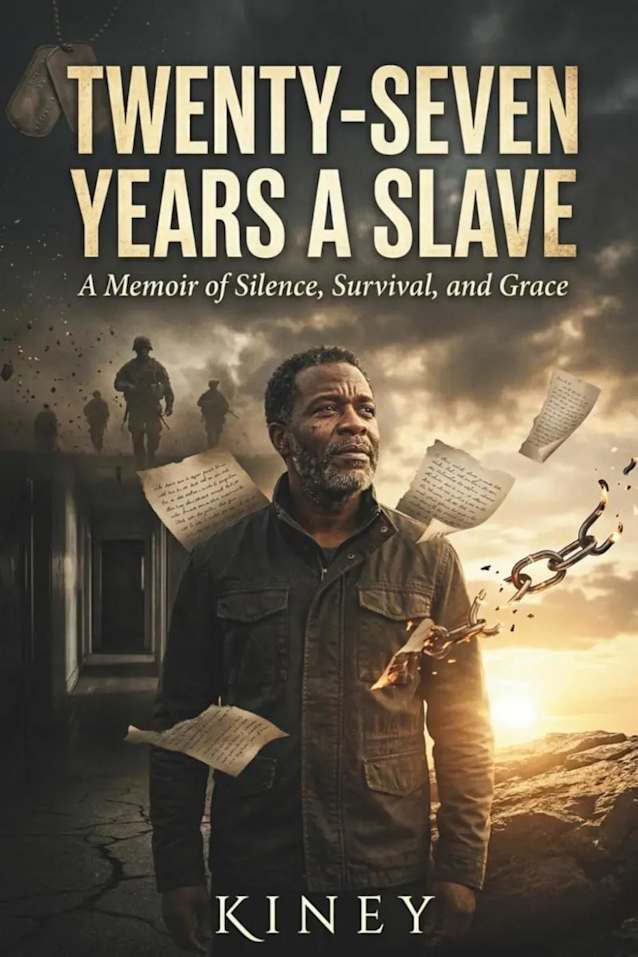
Twenty-Seven Years A Slave- A Memoir of Silence Survival and Grace (The African American Experience, #1)
About
Twenty-Seven Years A Slave is my true story of being emotionally, financially, and spiritually trapped for nearly three decades—and what it took to finally walk out of that captivity and build a different life. It is not about chains you can see; it is about the quiet, invisible ones: toxic relationships, self-doubt, shame, survival habits that once kept me alive but eventually kept me stuck. Page by page, I name the patterns that held me in place, the breaking points that forced change, and the small, unglamorous decisions that slowly turned survival into freedom. This book doesn’t talk down to you or pretend healing is simple. Instead, it walks alongside you in the mess: anger, exhaustion, numbness, guilt, fear, and the question, “Is this all my life will ever be?” You’ll see how I learned to confront my trauma instead of outrun it, how I began to separate who I am from what was done to me, and how I rebuilt my identity, one boundary and one brave choice at a time.
Recognizing the lies you’ve been living under (“I deserve this,” “I can’t change,” “This is all I get”) and replacing them with honest, hard-won truth.
Understanding how trauma rewires your reactions, so you stop blaming your character for what your nervous system is trying to survive.
Learning that asking for help, telling the truth about where you are, and accepting support are not signs of weakness but actual steps out of captivity.
Seeing concrete proof that life can look completely different on the other side of the chapter you’re in.
By the end of Twenty-Seven Years A Slave, you see me standing in a place I could not even imagine at the beginning: 14 published books, a new home, and a life that reflects who I am—not what I went through. I am giving you this book because I want you to have that same evidence in your hands. It is not a magic fix, and it will not do the work for you, but it will remind you, sentence after sentence, that your story is not over and that where you are right now is not where you have to stay.
Trailer
Praise for this book
Twenty-Seven Years A Slave: A Memoir of Silence, Survival, and Grace is an emotionally direct account of trauma, addiction, military service, recovery, faith, and the reclamation of voice. kiney writes not from a distance but from inside the long aftermath of childhood sexual violence and crack cocaine addiction, tracing how silence became survival—and how truth, therapy, writing, brotherhood, and grace became a path back.
This is a difficult book by design. Its value lies in its refusal to reduce recovery to a simple turnaround story. Instead, it presents healing as ongoing work: imperfect, accountable, spiritually grounded, and sustained through daily choices.
The memoir begins with a crucial insight: addiction did not begin with drugs. kiney presents crack cocaine use as a destructive response to older, unresolved wounds—trauma, shame, fear, emotional isolation, and the belief that strength required silence. The book repeatedly distinguishes explanation from excuse: the author acknowledges harm caused during addiction while insisting that recovery requires compassion alongside accountability.
The title signals the length and weight of that struggle. Across sixteen chapters and an epilogue, the narrative connects childhood trauma to later addiction, the desire for military structure, the pressures of service, the difficulty of asking for help, and the gradual construction of a life rooted in truth rather than concealment.
kiney’s military experience is handled with complexity. The Army provides discipline, belonging, purpose, and opportunities for leadership, but it does not erase trauma. The memoir is clear that competence, rank, and toughness can coexist with internal suffering—and that military culture can make it harder for people to acknowledge when they need help.
The book’s strongest quality is its honesty. kiney does not portray recovery as a clean ascent. He addresses relapse-shaped thinking, denial, strained relationships, suicidal thoughts, shame, and the harm addiction causes families. Yet the work avoids treating the author as permanently defined by his lowest periods. That balance gives the memoir moral credibility.
Writing itself becomes one of the book’s most moving themes. A therapist’s suggestion to keep a diary evolves into a practice of self-confrontation, then into authorship. kiney describes journaling as a space where memories could be named without being allowed to rule him in silence; eventually, those private pages help form the foundation for his fiction and public literary mission.
The chapters on leadership and brotherhood are also meaningful. Recovery reshapes the author’s idea of strength: a good leader still values discipline and standards, but learns to recognize invisible burdens in others. The memoir argues that accountability without humanity can miss the very people leadership is meant to protect.
kiney writes in an accessible, sermon-like reflective style, using short declarative passages and repetition to emphasize central truths: silence can become confinement; survival is not the same as healing; scars differ from open wounds; and a person’s past is not the only truth about them.
That approach gives the memoir a strong testimonial voice. Some readers may find that the recurring themes of trauma, addiction, faith, and recovery could be tightened in later revision, as several chapters revisit similar ground. But the repetition also mirrors the reality the book describes: healing is not a single realization but a truth a survivor must choose repeatedly.
Twenty-Seven Years A Slave is a courageous memoir of survival that speaks particularly strongly to survivors of abuse, people in recovery, veterans, families affected by addiction, and readers wrestling with shame or silence. Its central message is not that pain disappears, but that pain need not remain in command.
kiney’s final achievement is turning a life once organized around secrecy into an act of witness. The book insists that recovery is not perfection; it is the ongoing decision to tell the truth, accept help, make repair where possible, and continue becoming.