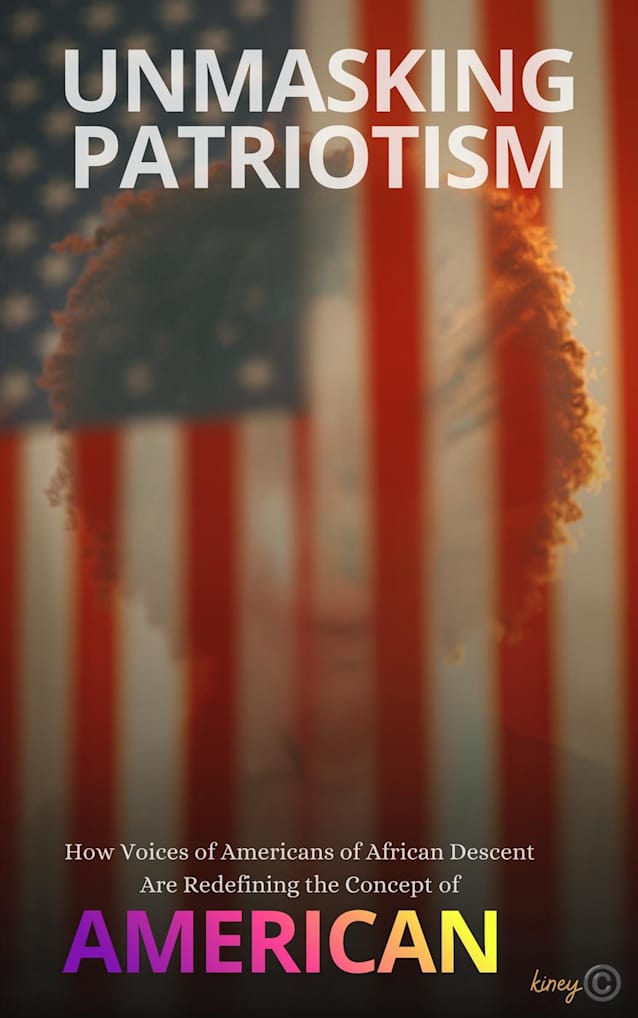
Unmasking Patriotism How Voices of Americans of African Descent Are Redefining the Concept of American (The African American Experience, #2)
About
This is the story of a people who were never meant to survive the world that was built around them.
Before the United States became a symbol of liberty, it was a land enriched by bondage. Before its promises of justice and equality were spoken with conviction, millions of Africans and their descendants had already paid the price of its rise with their labor, their suffering, and their lives. To be African American is to inherit that history—not as distant memory, but as living truth.
It is a history written in contradiction.
A nation founded on freedom denied freedom to those whose hands helped build it. A democracy spoke of equality while enforcing segregation, racial terror, exclusion, and silence. Generation after generation, Black Americans were asked to believe in the dream of a country that too often refused to believe in them.
And yet, this is not only a story of oppression.
It is also a story of endurance. Of creation. Of an unyielding determination to transform suffering into something no system of power could contain. Out of captivity came culture. Out of displacement came identity. Out of injustice came movements, music, language, faith, brilliance, and beauty that would shape not only America, but the world.
To name this people has never been simple.
African American. Black. American. Each term carries its own history, its own politics, its own claim to belonging. Some names reach back to ancestry. Others speak to solidarity, resistance, and pride. Some reject division altogether, insisting on a citizenship that should never have required qualification in the first place. But names alone cannot erase the realities that made them necessary.
Because the African American experience has never existed outside the reach of history.
It lives in the memory of slavery and Jim Crow. In the shadow of lynching and segregation. In the persistence of profiling, inequality, and institutional suspicion. It lives in the daily negotiation between how Black people see themselves and how they are seen by the nation around them.
Even language becomes part of the struggle.
Words have been used to degrade, to divide, to define, and, at times, to reclaim. Some are spoken within the community as expressions of familiarity or resistance. The same words, spoken from outside it, can carry the full weight of violence and contempt. In America, even identity is contested terrain.
And still, the story continues.
To be African American is to stand in the presence of pain and possibility at once. It is to come from a people who endured the unimaginable and still created joy, meaning, excellence, and future in the face of it. It is to belong to a history that is not separate from the American story, but essential to it.
This is not a side note to the nation’s history.
This is the heart of it.
Trailer
Praise for this book
Unmasking Patriotism: How African American Voices Are Redefining the Concept of African American is a personal, political, and historical examination of what patriotism means when Black Americans have repeatedly served a nation that has not always fully served them in return. kiney challenges the familiar symbols of patriotism—flags, military service, national pride, and democratic language—by asking a harder question: who has truly been included in the promise of “American”?
The book argues that African American identity cannot be separated from survival, creativity, service, cultural inheritance, and the ongoing struggle for full recognition. It presents Black patriotism not as blind loyalty, but as the determination to demand that America live up to its stated ideals.
Patriotism without illusion
One of the book’s strongest contributions is its refusal to treat patriotism as simple celebration. kiney writes from the perspective of a veteran and member of a family whose generations have answered calls to military service—from Vietnam and the Gulf War to Iraq and Afghanistan. That history makes the book’s critique carry particular weight: service, sacrifice, and citizenship are not abstract ideas here; they are lived commitments.The text insists that Black Americans have helped defend the country in uniform while continuing to confront unequal treatment at home. This contradiction—bleeding for a nation while still being treated as a second-class citizen—becomes the book’s central moral tension.
Identity, history, and memory
kiney explores the complexity of self-identification: African American, Black, American of African descent, and simply American. Rather than declaring one label universally correct, the book recognizes identity as personal, historical, and shaped by family, geography, culture, and lived experience.The strongest passages connect identity to memory. Family migrations, Southern kinship networks, military service, cultural traditions, and the stories passed down through generations become a living archive. The book reminds readers that community memory is not a minor detail—it is often what survives when official history excludes, simplifies, or erases Black experience.
A call to accountability
The book also confronts political violence, unequal systems of justice, racial hierarchy, the legacy of slavery, and the use of religious or legal language to justify dispossession. Its tone is urgent and unafraid of discomfort. Kiney’s larger point is clear: democracy cannot survive as a slogan if it does not protect equal dignity, accountability, and full citizenship.At its best, Unmasking Patriotism calls readers to distinguish genuine patriotism from obedience to power. Love of country, the book argues, should include the courage to tell the truth about its history and demand better from its institutions.
Verdict
Unmasking Patriotism is a heartfelt, wide-ranging work of social reflection that combines personal testimony, military experience, family history, Black identity, and political critique. It is especially meaningful for veterans, readers of African American history, and anyone wrestling with the gap between America’s democratic language and its unequal realities.kiney’s message is ultimately one of resilience: Black Americans are not outside the American story. They have built it, defended it, challenged it, and continually expanded its meaning. The book asks America to recognize that truth—not as a favor, but as an overdue act of honesty.