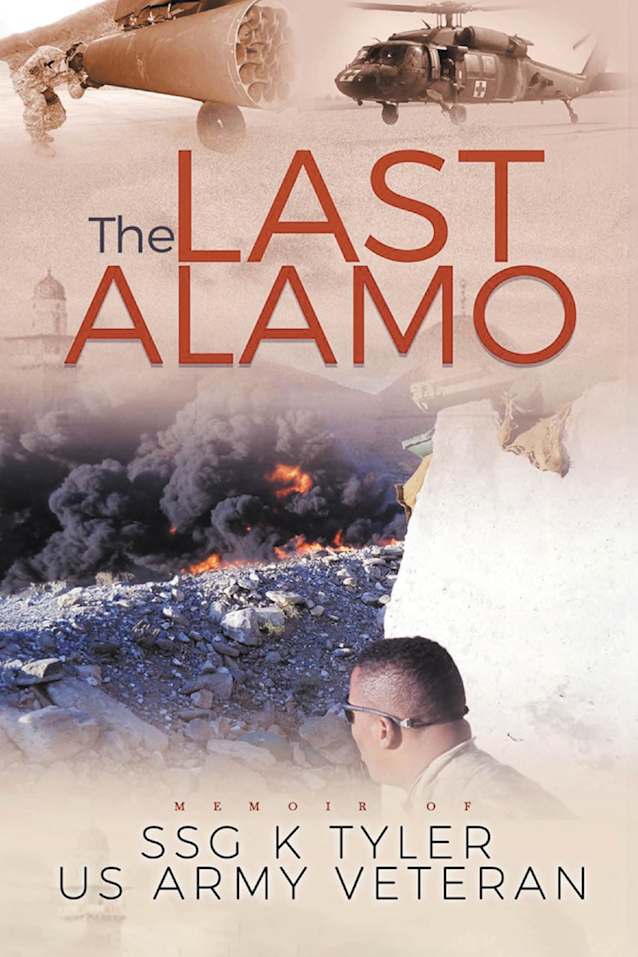
The Last Alamo: MEMOIR OF SSG K TYLER, US ARMY VETERAN
About
After an attack on a FARP (Forward Arming and Refueling Point) in an area known as the “beast” in Kunar Province, Afghanistan, an American Army Aviation Fuel “Distro” Squad was thought to be wiped out, leaving no survivors. With the help of their NCO (noncommissioned officer), Army veteran Kenneth Tyler aids his squad to safety. However, with the continued racial barriers against minorities in the military, SGT Tyler finds that the task of saving his team is anything but easy as superiority, respect, loyalty, and command are tested along the way as they fight to live another day.
The Last Alamo is a memoir that tells a poignant yet courageous story of an American from Houston, Texas, who successfully joined the Army and fulfilled a long-inspired familial legacy to serve his country. It explores the challenges during Tyler’s career in the US military, including facing challenges of racial discrimination among the people in the country he fought to honor and protect. Tyler is vulnerable in his collection of essays as he expresses his fears in the moment of crisis that ultimately saved his and his squad’s life.
Trailer
Praise for this book
The Last Alamo is a memoir that refuses to let military history fade into forgotten language and forgotten sacrifice. SSG K. Tyler builds a narrative bridge between two American wars, stretching from Vietnam's jungles to Afghanistan's mountains, and in doing so, preserves a vocabulary and a history that risk disappearing entirely from public memory.
A Story Told in a Vanishing Language
What sets this memoir apart is its commitment to language itself. Tyler doesn't just tell a war story; he catalogs the slang, acronyms, and shorthand that shaped daily life inside the ranks, terms like "cruit," "FNG," and "Graf" that never made it into any dictionary but once meant everything to the soldiers who lived by them. This linguistic archaeology gives the book an unusual texture, part memoir, part cultural preservation project, reminding readers that the military remains one of the largest repositories of specialized language in American life.
Inheritance and Survival
At the emotional center of the book is the story of Harding Thompson, a Vietnam combat veteran whose unit left him behind during an operation, forcing him to survive alone in hostile territory. Thompson's decision to share that story with Tyler, unprompted and without fanfare, becomes the quiet seed of a survival philosophy that Tyler carries with him decades later into Afghanistan. The book handles this inheritance with restraint rather than melodrama, letting the weight of Thompson's lesson land through action rather than exposition.
Confronting an Uncomfortable History
Tyler doesn't shy away from harder truths either. The memoir touches on a rarely discussed chapter of military history: evening briefings warning Black soldiers about sundown towns while stationed in the South during the 1970s and 80s, a reminder that desegregation in the military didn't erase the dangers soldiers of color still faced off base. This willingness to hold both the shared brotherhood of service and its racial fault lines gives the book real historical weight.
Verdict
The Last Alamo succeeds as both personal memoir and historical document. Tyler's prose is economical, and his instinct to preserve fading military language alongside personal testimony makes this a valuable read for veterans, military historians, and anyone interested in the lived texture of service across generations.